

Singapore allocates most residential land through a centralized planning system led by the state. This approach allows urban development to serve long-term economic stability, environmental control, and social order at the same time. Housing projects are rarely just buildings. They are signals of policy direction and fiscal discipline.
That reality is clear at Tengah Garden Residences, which rises within Singapore’s first planned Forest Town. The project sits inside Tengah New Town, a district designed from the ground up by public agencies to support green living, car-lite mobility, and efficient land use. Private development here follows a government blueprint that reflects political priorities before market trends.
Tengah’s location is not accidental. The area was released through the Government Land Sales program, a controlled process that allows the state to pace supply, manage prices, and guide urban growth. By deciding when and how land enters the market, policymakers influence investment flows and housing affordability. Developers operate within these boundaries, aligning business goals with national planning objectives.
Political Planning as Economic Policy
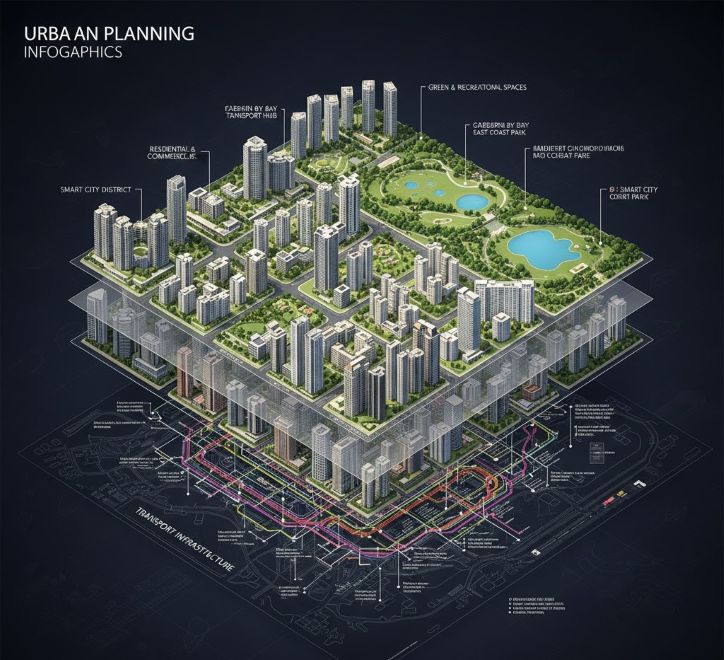
Urban planning in Singapore functions as an extension of economic policy. Agencies such as the Urban Redevelopment Authority and the Ministry of National Development coordinate land use, transport links, and environmental standards years ahead. Tengah reflects this approach through its integration with the Jurong Region Line, cycling networks, and centralized cooling systems designed to reduce energy use.
These features carry political weight. They demonstrate how the government frames sustainability as a practical investment rather than a slogan. Green design lowers long-term infrastructure costs and supports Singapore’s climate commitments. For residents and investors, it signals policy consistency, which reduces uncertainty and supports confidence in the property market.
Public Land, Private Capital
The balance between public control and private capital is a defining feature of Singapore’s real estate system. Land remains state-owned, while development rights are sold under strict conditions. This model limits speculation and ties financial returns to compliance with planning goals.
Within Tengah, developers respond to guidelines on building height, green coverage, and community spaces. These rules shape financial outcomes by influencing construction costs and buyer appeal. Over time, they help maintain stable property values and protect the broader housing ecosystem.
Projects like Tengah Garden Residences Singapore show how political decisions translate into financial structure. Pricing, density, and amenities reflect state-led priorities around liveability and long-term demand rather than short-term gains, which helps explain why real estate is a good investment even in tightly regulated markets like Singapore’s.
Urban Growth and Public Trust
Large-scale developments serve another role. They act as visible proof of governance. When planning delivers efficient transport, green spaces, and coherent neighborhoods, public trust grows. Tengah’s Forest Town concept supports this by promising cleaner air, quieter streets, and shared public spaces.
This trust matters in a dense city where land is scarce. Political legitimacy is reinforced when citizens see careful stewardship of limited resources. Housing policy becomes a social contract, linking economic growth with quality of life.
Messaging Through Design
Architecture and town planning communicate values. Tengah’s emphasis on smart systems and nature integration aligns with Singapore’s broader message of being future-ready. It positions the country as a place where policy, technology, and finance move together.
That message reaches investors as well. A clear planning narrative reduces risk and attracts long-term capital. Developments guided by consistent political logic tend to perform more steadily across market cycles.
Conclusion
Tengah Garden Residences ultimately represents more than a housing option. It reflects how Singapore uses urban development to express political intent, manage economic outcomes, and maintain public confidence. By aligning sustainability, fiscal planning, and controlled land release, projects like Tengah Garden Residences reveal how deeply politics and economics are woven into the city’s built environment.
